Cloud Based Business Applications: Benefits, Challenges, and Future Trends
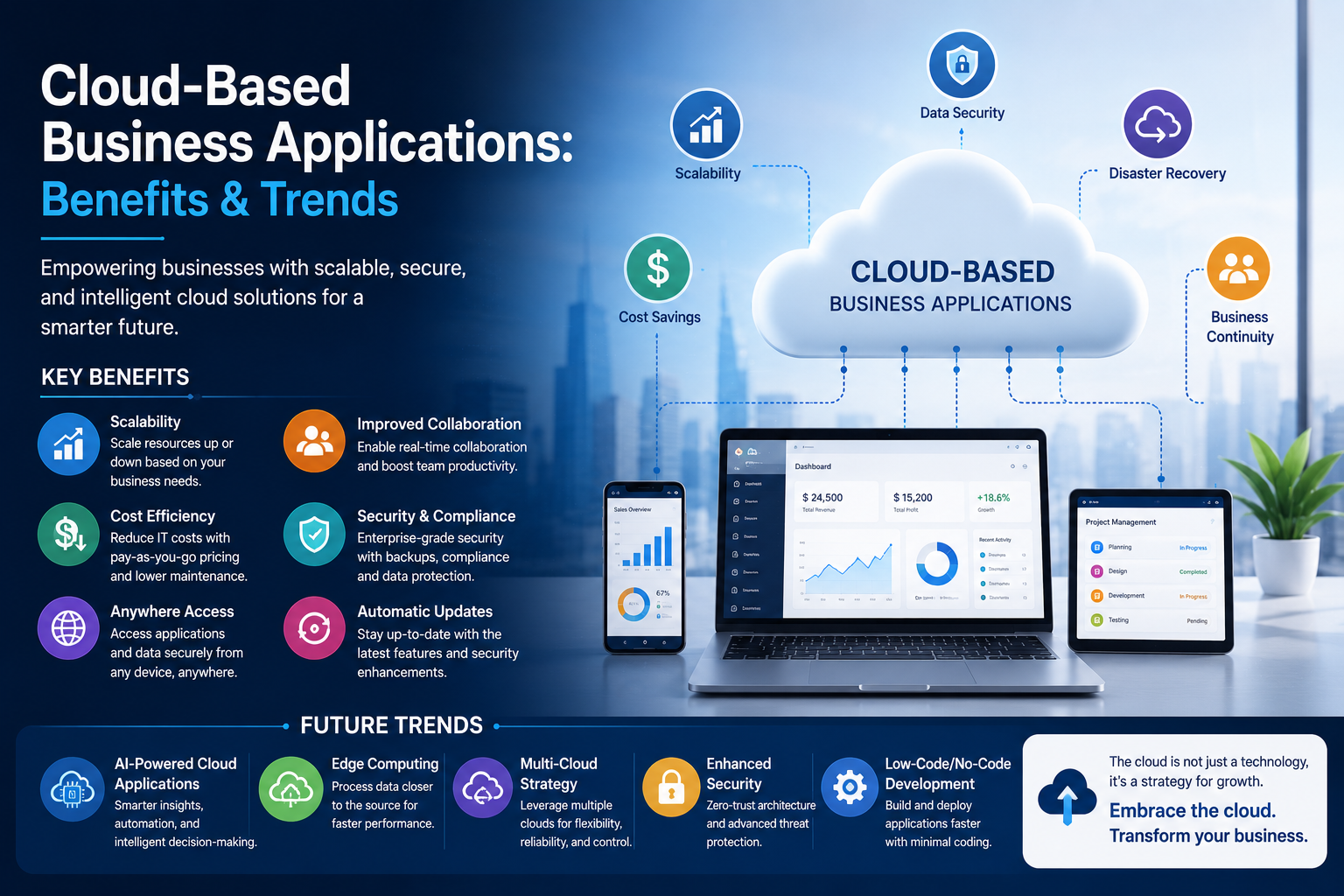
In Cloud Based business application today's fast-paced digital economy, businesses need technology solutions that are flexible, scalable, and cost-effective. Traditional on-premise software systems often struggle to meet the demands of modern organizations that require remote accessibility, seamless collaboration, and real-time data management. This is where Cloud-Based Business Applications have emerged as a game-changing solution.
From startups to large enterprises, organizations across industries are adopting cloud technologies to improve operational efficiency, reduce infrastructure costs, and accelerate digital transformation. As cloud computing continues to evolve, businesses are increasingly relying on cloud-based applications to support growth, innovation, and competitive advantage.
In 2026, cloud-based business applications are no longer an option—they have become a necessity for organizations seeking agility and long-term success.
What Are Cloud-Based Business Applications?
Cloud-Based Business Applications are software solutions hosted on cloud infrastructure rather than on local servers or computers. These applications are accessed through the internet, allowing users to work from anywhere while maintaining access to business data and critical systems.
Common examples include:
Customer Relationship Management (CRM) software
Enterprise Resource Planning (ERP) systems
Project management platforms
Accounting software
Human Resource Management Systems (HRMS)
Inventory management solutions
Business intelligence dashboards
Collaboration and communication tools
Cloud applications provide businesses with the flexibility to access software resources without investing heavily in physical infrastructure.
Why Businesses Are Moving to Cloud-Based Applications
The demand for Cloud-Based Business Applications has increased significantly over the past few years.
Several factors contribute to this growing adoption:
Digital Transformation
Organizations are embracing digital technologies to improve productivity and customer experiences.
Remote and Hybrid Work
Employees require secure access to business systems from various locations.
Scalability Requirements
Businesses need technology solutions that can grow alongside their operations.
Cost Optimization
Companies are looking for ways to reduce infrastructure and maintenance expenses.
Faster Innovation
Cloud platforms enable rapid deployment of new applications and services.
These factors make cloud technology an essential component of modern business strategy.
Key Benefits of Cloud-Based Business Applications
1. Improved Accessibility
One of the biggest advantages of cloud-based applications is accessibility.
Employees can access software and business data from:
Offices
Homes
Client locations
Mobile devices
This flexibility supports remote work environments and improves operational efficiency.
2. Scalability and Flexibility
Business needs change over time.
Cloud solutions allow organizations to:
Add users quickly
Increase storage capacity
Expand application functionality
Support business growth
Unlike traditional systems, cloud applications can scale without major infrastructure investments.
3. Cost Savings
Cloud-based applications reduce the need for:
Physical servers
Hardware maintenance
IT infrastructure upgrades
Large upfront software investments
Organizations typically pay only for the resources they use, improving cost efficiency.
4. Enhanced Collaboration
Cloud technology enables teams to collaborate in real time.
Employees can:
Share files instantly
Work on projects simultaneously
Communicate efficiently
Access updated information
This improves productivity and supports distributed workforces.
5. Automatic Updates
Cloud service providers regularly update software with:
New features
Performance improvements
Security enhancements
Bug fixes
Businesses can access the latest functionality without manual upgrades.
6. Data Security and Backup
Modern cloud platforms invest heavily in cybersecurity.
Features often include:
Data encryption
Multi-factor authentication
Automated backups
Disaster recovery solutions
Continuous monitoring
These measures help protect business-critical information.
How Cloud-Based Business Applications Improve Productivity
Productivity remains a top priority for organizations.
Cloud applications improve efficiency by:
Streamlining Workflows
Automated processes reduce manual effort and eliminate repetitive tasks.
Centralizing Information
Employees can access data from a single platform rather than multiple disconnected systems.
Improving Communication
Integrated collaboration tools facilitate faster communication between teams.
Supporting Mobility
Employees remain productive regardless of location.
These benefits contribute to better operational performance and business outcomes.
Popular Types of Cloud-Based Business Applications
Customer Relationship Management (CRM)
Cloud CRM platforms help businesses:
Manage customer interactions
Track sales opportunities
Improve customer service
Analyze customer data
Enterprise Resource Planning (ERP)
Cloud ERP solutions integrate core business functions such as:
Finance
Procurement
Inventory
Operations
Human Resource Management Systems
Cloud HR software supports:
Recruitment
Payroll
Employee management
Performance tracking
Project Management Applications
Teams can manage projects, deadlines, and resources through centralized cloud platforms.
Business Intelligence Solutions
Cloud analytics applications help organizations:
Visualize data
Generate reports
Monitor performance
Support decision-making
These applications provide valuable business insights in real time.
Challenges of Cloud-Based Business Applications
Despite their advantages, cloud solutions also present challenges.
Data Security Concerns
Businesses may worry about storing sensitive information on external servers.
Organizations should choose providers with strong security practices and compliance certifications.
Internet Dependency
Cloud applications require reliable internet connectivity.
Network outages can temporarily impact access to systems and data.
Integration Complexity
Connecting cloud applications with existing systems may require careful planning and technical expertise.
Compliance Requirements
Certain industries must comply with strict regulations regarding data storage and privacy.
Businesses need to ensure cloud providers meet applicable standards.
Vendor Lock-In
Migrating from one cloud platform to another can sometimes be challenging.
Organizations should evaluate long-term flexibility before selecting a provider.
Cloud-Based Business Applications and Digital Transformation
Digital transformation initiatives often rely on cloud technology.
Cloud applications support transformation by enabling:
Business Agility
Organizations can respond quickly to changing market conditions.
Innovation
New technologies can be deployed rapidly.
Process Automation
Automated workflows improve efficiency and reduce operational costs.
Data-Driven Decisions
Real-time analytics support smarter business decisions.
Cloud technology acts as the foundation for many digital transformation strategies.
The Role of Artificial Intelligence in Cloud Applications
Artificial intelligence is increasingly integrated into cloud-based software.
AI-powered cloud applications can:
Automate customer support
Predict business trends
Analyze large datasets
Generate recommendations
Improve operational efficiency
The combination of AI and cloud Based Business Application computing is creating smarter and more intelligent business solutions.
Cloud-Based Applications for Different Industries
Healthcare
Cloud based business application solutions support:
Patient management
Telemedicine
Electronic medical records
Healthcare analytics
Hospitality
Hotels use cloud applications for:
Revenue management
OTA monitoring
Guest relationship management
Booking systems
Retail
Retail businesses leverage cloud based business application platforms for:
Inventory management
E-commerce operations
Customer analytics
Point-of-sale integration
Manufacturing
Manufacturers use cloud technology for:
Production monitoring
Supply chain management
Quality control
Asset tracking
Education
Educational institutions implement cloud based business application platforms for:
Learning management systems
Student administration
Virtual classrooms
Collaboration tools
Cloud based businesss applications continue to transform operations across industries.
Future Trends in Cloud-Based Business Applications
The future of cloud computing looks highly promising.
Several trends are expected to shape the industry in the coming years.
1. Artificial Intelligence Integration
AI will become a standard feature within cloud based business applications.
Businesses will benefit from:
Predictive analytics
Intelligent automation
Personalized user experiences
2. Multi-Cloud Strategies
Organizations will increasingly use multiple cloud based business application providers to improve flexibility and reduce dependency on a single vendor.
3. Edge Computing
Data processing will move closer to users and devices, reducing latency and improving performance.
4. Advanced Cybersecurity
Cloud based business application providers will continue investing in:
Zero-trust security models
Threat detection
Automated security monitoring
5. Industry-Specific Cloud Solutions
More specialized cloud based business application applications will emerge to address unique industry requirements.
6. Hyper-Automation
Businesses will automate increasingly complex workflows using cloud based technologies.
These innovations will further enhance the value of cloud-based business applications.
How Prowen Technologies Develops Cloud-Based Business Applications
Prowen Technologies helps businesses leverage the power of cloud computing through customized software solutions.
The company specializes in developing scalable and secure cloud applications designed to meet modern business requirements.
Custom Cloud Application Development
Build cloud-native applications tailored to business processes.
Enterprise Software Solutions
Create scalable platforms that support growth and operational efficiency.
Cloud Migration Services
Move existing systems and applications to cloud environments.
AI-Powered Cloud Applications
Combine artificial intelligence and cloud technology for smarter business operations.
Software Integration Services
Connect cloud applications with existing systems and third-party platforms.
Ongoing Support and Maintenance
Ensure optimal performance, security, and reliability.
By delivering innovative cloud-based solutions, Prowen Technologies helps organizations accelerate digital transformation and improve business performance.
Best Practices for Cloud Adoption
To maximize success with cloud-based applications, businesses should:
Define clear objectives
Assess current infrastructure
Prioritize security requirements
Choose scalable solutions
Plan integration strategies
Train employees effectively
Monitor performance continuously
A well-planned cloud strategy ensures long-term value and successful implementation.
Conclusion
Cloud-Based Business Applications are transforming how organizations operate, collaborate, and grow. By providing scalability, flexibility, accessibility, and cost efficiency, cloud solutions help businesses adapt to changing market demands and support digital transformation initiatives.
Although challenges such as security, compliance, and integration must be addressed, the benefits of cloud adoption far outweigh the risks when implemented strategically.
As technologies such as artificial intelligence, automation, and advanced analytics continue to evolve, cloud-based applications will become even more powerful and essential for modern businesses.
Prowen Technologies empowers organizations with innovative Cloud-Based Business Applications that improve efficiency, enhance collaboration, and drive sustainable growth. Businesses that embrace cloud technology today will be better positioned to succeed in the digital future.